Upcycling for businesses as an alternative to recycling and reuse
Although the term upcycling is relatively recent, the practice itself dates back centuries, as seen in traditions such as making the most of leftover food, something that has been common in households for generations.
This approach is based on transforming waste or discarded products into new objects that are not only useful, but also have a higher value than the original. Unlike traditional recycling, which often involves energy-intensive industrial processes, upcycling focuses on creativity, smarter resource use and a lower environmental impact.
But what makes it different from other options such as reuse or remanufacturing? Does it have applications beyond the textile industry, where upcycling has become particularly popular?
Upcycling, reuse, recycling or remanufacturing: a guide to circular economy terminology
In the circular economy ecosystem, it is easy to confuse terms such as recycling, reuse, remanufacturing and upcycling.
They all share the goal of reducing waste and extending the useful life of materials, but each option follows a different approach:
- **Recycling involves breaking down a material and processing it into raw material to manufacture new products. It requires complex industrial processes and can sometimes result in a loss of the original material's quality, as can happen with recycled plastics or paper.
- **Reuse means using an object again without fundamentally changing its structure. It is the most direct and straightforward option, although it does not necessarily involve improving the product's functionality or appearance. It may, however, involve some form of repair or cleaning.
- **Remanufacturing goes a step further by restoring used products so that they perform like new, or even better, through a rigorous industrial process that can include disassembly, cleaning, repair and component replacement. In this case, products can be upgraded and their warranties should also be renewed.
- **Upcycling creatively transforms the original object without destroying it. The result is a product with greater environmental, functional or aesthetic value than the original, without relying on intensive industrial processes.
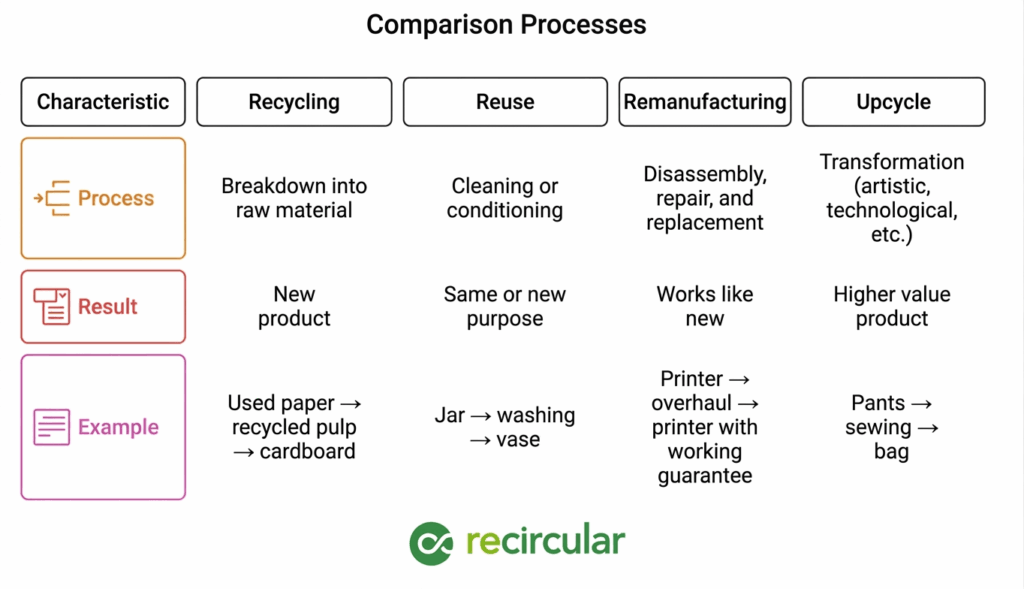
Source: created by recircular
Upcycling applications beyond the textile industry
Although the aim of this article is to highlight the potential of upcycling beyond textiles, it is important not to overlook the fact that the textile sector remains one of the most active areas when it comes to circular innovation.
A good example is Upcyclick, a platform that allows people to transform clothes they no longer wear into unique pieces designed by professionals. Far from being limited to a DIY approach, this model promotes textile upcycling and turns it into an opportunity to stimulate the economy, reduce the consumption of virgin raw materials and extend the useful life of clothing while adding aesthetic and functional value.
However, upcycling can be applied across a wide range of industries.

Food
Food upcycling makes it possible to transform waste such as vegetable peels, plant-based beverage by-products or imperfect fruit into stocks, snacks, flours or preserves.
There are also more unusual examples, such as extracting calcium carbonate from discarded eggshells or extracting essential oils from coffee grounds or orange peels.
Our collaboration with Elika, aimed at giving food surpluses and food waste a second life, is a clear example of this approach.
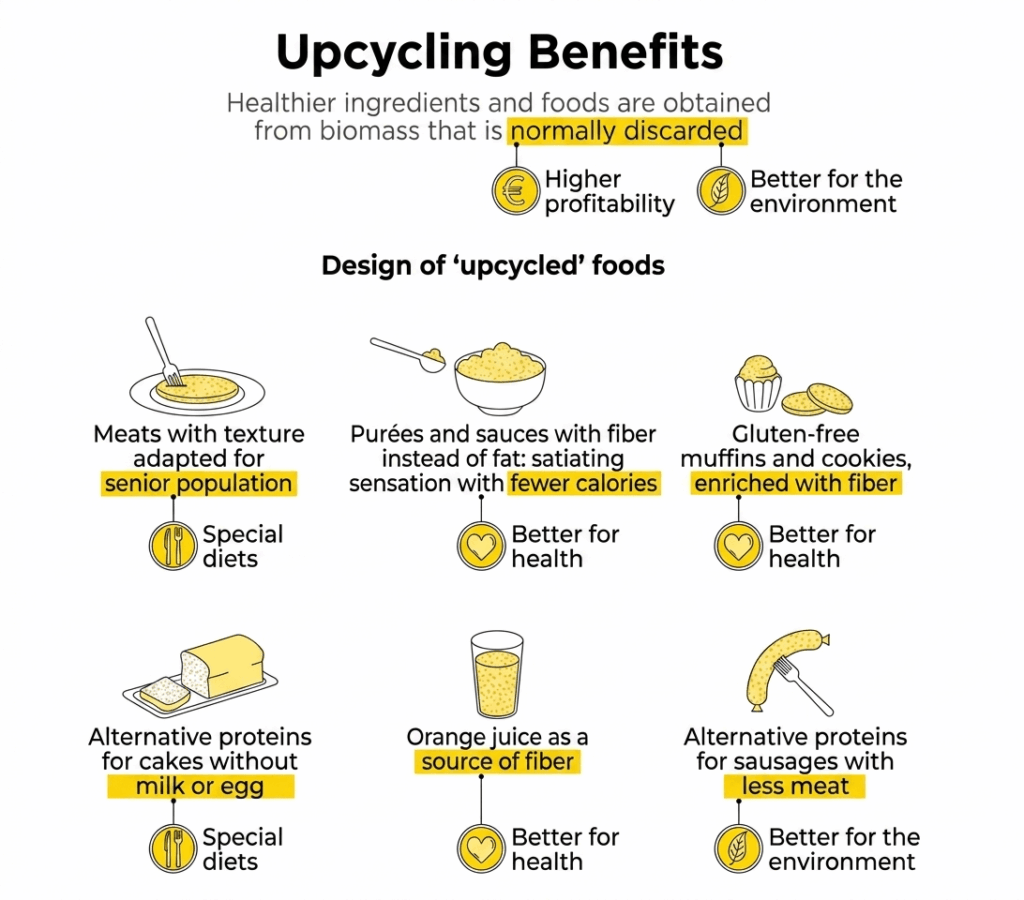
Source: AZTI
Architecture and construction
The architecture and construction sectors have embraced upcycling by transforming shipping containers, for example, into homes, offices and commercial spaces.
The image below shows another example: the conversion of train carriages into luxury suites at a hotel in Thailand.
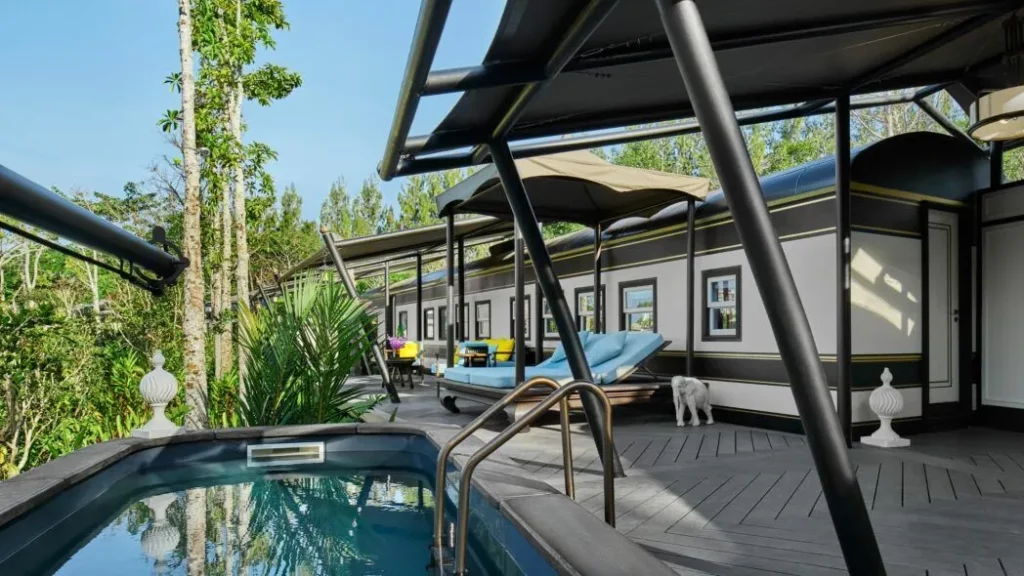
Source: InterContinental Khao Yai Resort, 2023
Technology
In technology, and although some applications could also be considered recycling, one common example of upcycling is 3D printing, where plastic waste is processed «without compromising its quality or value for subsequent use».
Art
Creative upcycling, particularly when linked to the world of art, is another area where the only real limit is imagination.
Joseph Cornell and Marcel Duchamp are considered two of its main pioneers. In recent years, artists such as Thomas Deininger have also created striking works using discarded materials, such as the one featured in this video we shared on our Instagram some time ago.
Automotive industry
Car manufacturers are also recognising the potential of upcycling.
From recycled composite materials used to manufacture new components to biofillers made from nutshells or plant fibres, this strategy can give industrial waste a second life while creating materials with high functional and aesthetic value.
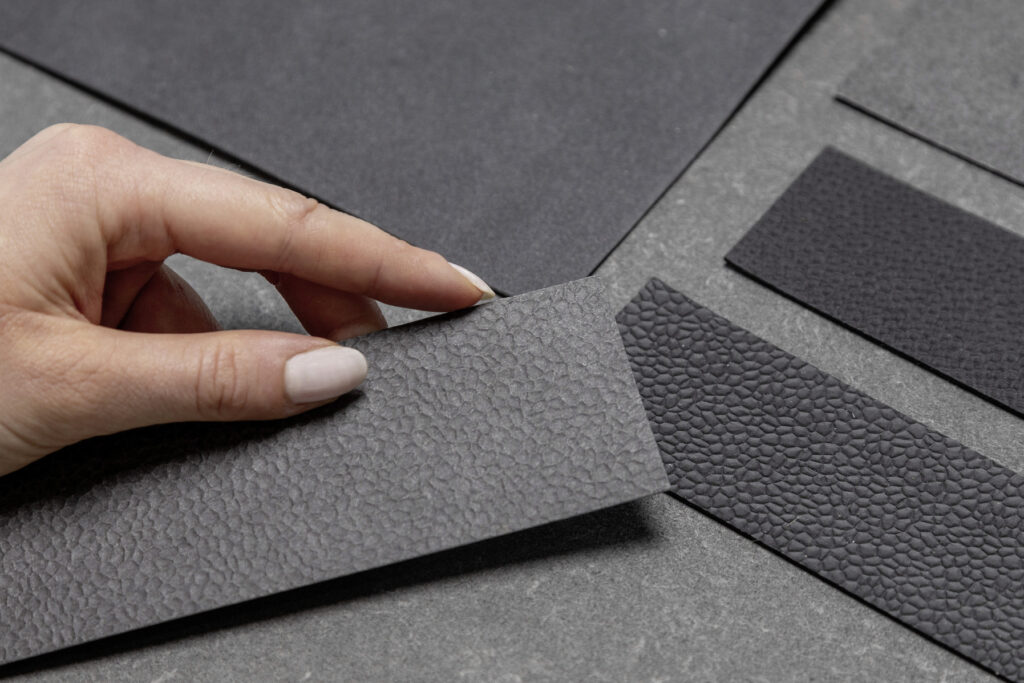
Synthetic leather made from industrial hemp. Source: Volkswagen, 2024.
Why upcycling can change the way businesses operate
More and more companies are asking themselves what to do with their waste. In many cases, the answer is not to get rid of it, but to make better use of it. Through our circular waste management service, we help businesses make this a reality.
Upcycling not only helps reduce environmental impact by lowering the consumption of natural resources and preventing materials from ending up in landfill. It can also open the door to new products, new business lines and new ways of connecting with customers who value sustainability.
For example, it can help companies build an authentic brand story. Brands such as Patagonia have made upcycling and extending product life part of their identity by repairing, reusing and transforming garments to reduce their environmental footprint.
And yes, for many SMEs, upcycling can be an accessible way to move towards a circular economy without requiring major investments, while still generating tangible impact.
recircular can help your business move towards upcycling
Turning a concept into action is not always easy. Identifying which materials could be given a new life through an upcycling process is not always straightforward for businesses.
This is where platforms such as recircular can act as agents of transformation. Our platform helps identify real opportunities for resource recovery by connecting companies that generate waste with others that can put those materials to productive use.
We also provide advice and follow-up services to help ensure that resource recovery decisions translate into real-world impact. The result: less waste, more resources kept in use and, in many cases, new business opportunities.
From waste to resource. From idea to action.
Upcycling has evolved from a niche practice into a real alternative within the circular economy.
It creates value, drives innovation and, above all, demonstrates that there is another way of doing things: more creative, more efficient and more respectful of the environment.
Businesses have the power to transform waste into resources and rethink their production models through a sustainability-driven approach.
If you want to discover what opportunities exist within your organisation or how to take the first step towards making smarter use of your materials, we are here to help.
Shall we start looking for value where others only see waste?
