Success Stories at recircular: Reusing a Surplus of IBC Containers
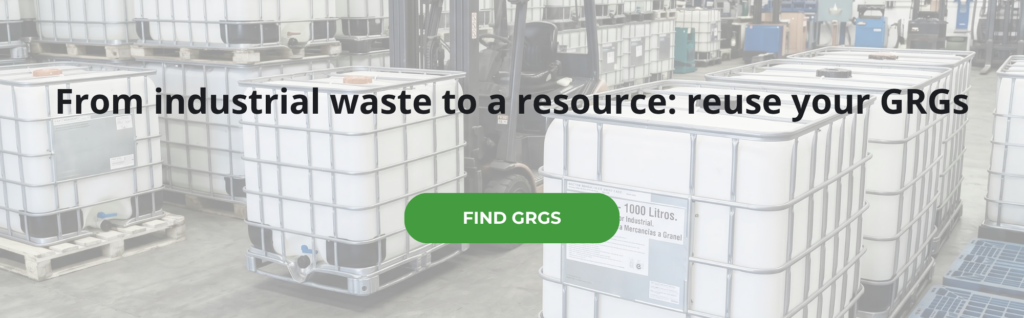
An industrial company had accumulated a batch of 1,000-litre IBC containers that it no longer needed for its regular operations. The containers were in good condition, but changes to its internal processes had reduced the need to use this type of container.
What initially seemed like a temporary surplus of IBC containers gradually became a storage problem. The containers remained in storage with no clear exit date while the company looked for an alternative that would allow them to be given a new use.
At the same time, another company needed to incorporate industrial containers into its operations and was considering different options to meet this need without having to purchase all the equipment new.
Situations like this are common in industry: a product may no longer be needed by one company while still having a useful purpose and value for another.
IBC containers that still have plenty to offer
IBC containers, also known as Intermediate Bulk Containers (IBCs), are designed for the storage and transportation of different types of products.
They are widely used in sectors such as the chemical industry, food and beverage, agriculture, water management and a wide range of industrial and logistics activities.
When these containers are no longer needed for their original purpose, it does not necessarily mean that they have reached the end of their useful life. Depending on their characteristics and condition, they may be reused for new applications.
As we explain in our article on the benefits of reusing IBC containers, extending the useful life of these containers can be an economically and environmentally interesting alternative.
That is why, before considering an IBC container as waste, it is important to assess whether it can be given a second life.
A surplus of IBC containers: a storage and management problem
The company had been using the containers as part of its regular operations. Over time, changes to certain processes meant that some of the IBC containers were no longer needed.
The first option was to keep them in storage until a potential future use could be found.
However, time passed and the containers continued to take up space at the facilities. Although each individual unit might seem insignificant, storing an entire batch required a considerable amount of space for material that was no longer part of the company's day-to-day operations.
In addition to the space occupied, keeping a surplus in storage for long periods can make warehouse management more difficult and generate costs related to storage, handling and maintenance.
The company therefore needed to find a solution that would allow it to free up space without wasting the value of containers that could still be put to use.
When one company's surplus becomes another company's resource
Finding a company interested in a batch of IBC containers is not always easy.
Although there is demand for this type of container, the company holding the surplus may not have direct contacts with potential buyers or know which industries could make use of the material.
This lack of connection between supply and demand means that materials that could still be used may remain in storage or end up following waste management routes that are less focused on reuse.
Reuse makes it possible to change this dynamic. Instead of manufacturing or purchasing new products every time a need arises, companies can make use of resources that already exist.
In our article on material reuse as an alternative to recycling, we explain how this approach can extend the useful life of products and materials while reducing the consumption of new raw materials.
In this case, the company listed the batch of IBC containers on recircular, providing details about their characteristics, quantity available, condition and location.
From there, other companies interested in the material were able to discover its availability and assess whether it matched their needs.

The operation: giving the containers a second life
Among the interested companies was one that needed to incorporate new containers into its storage operations.
Accessing existing IBC containers offered an alternative to purchasing all-new units.
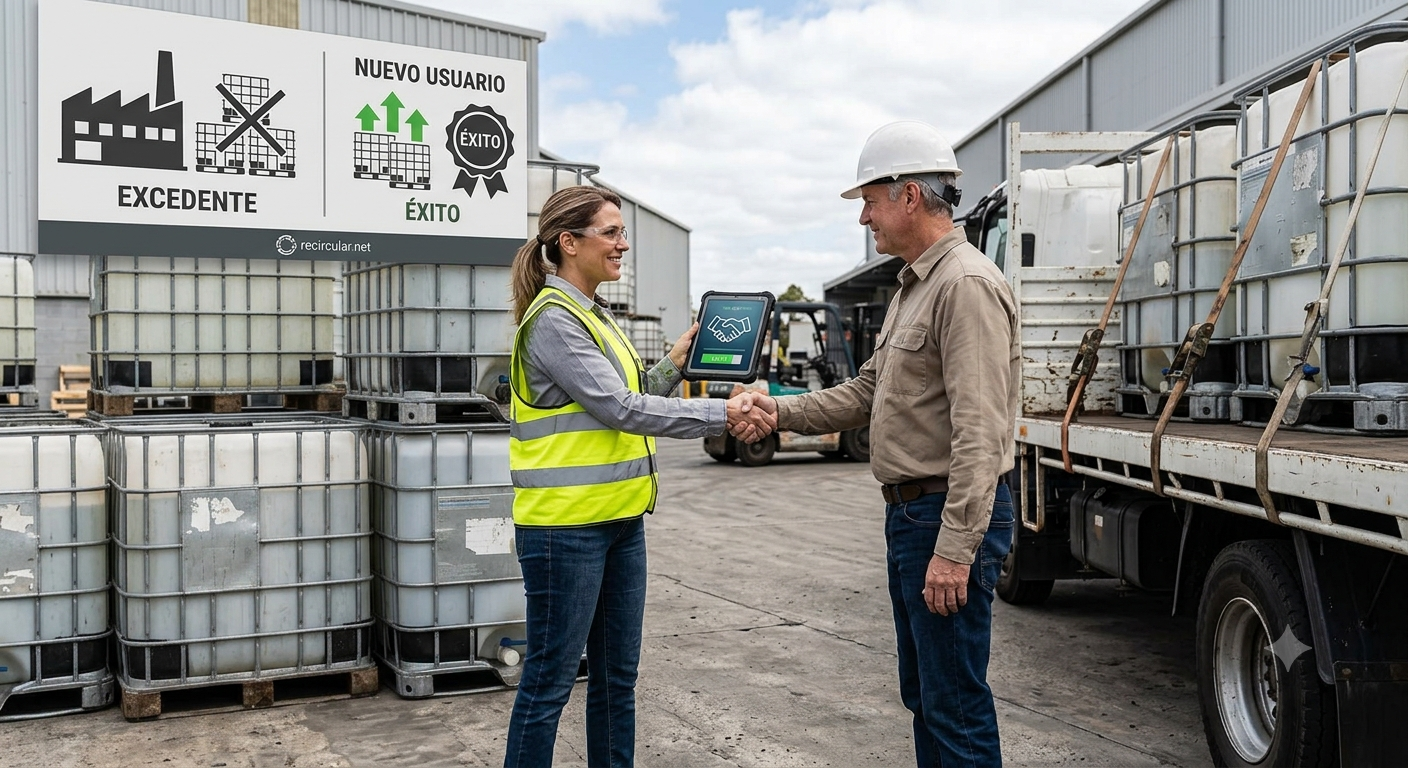
After reviewing the characteristics of the batch and confirming that the containers were suitable for their intended use, both parties reached an agreement.
The operation included arranging the collection of the containers and transporting them from the facilities of the company that no longer needed them to their new destination.
As a result, the IBC containers stopped taking up space in a warehouse where they no longer had a purpose and became part of another company's operations.
The material did not disappear: it changed users.
And that is precisely one of the key principles of industrial reuse.
The reuse of industrial containers and drums makes it possible to extend their useful life and reduce the need to manufacture new containers when existing ones can still perform their intended function.
Benefits for both companies
The operation created value for both parties.
On the one hand, the company holding the surplus was able to free up space and find an outlet for assets it no longer needed, while also recovering part of their value.
On the other hand, the purchasing company was able to access containers that could meet its needs without having to rely exclusively on purchasing new units.
But the benefits were not only economic.
By extending the useful life of the IBC containers, the operation prevented usable containers from remaining underutilised and reduced the need to manufacture new containers to meet a demand that could be satisfied with units that already existed.
These types of operations therefore contribute to making better use of available resources and moving towards more circular production and consumption models.
From industrial surplus to resource
This case reflects a situation that can occur across many industrial sectors.
Changes in production processes, modifications to storage requirements or the renewal of certain systems can generate surpluses of materials and equipment that still retain significant value.
The challenge is to find a new use for these assets before the surplus becomes a storage problem or waste.
In the case of IBC containers, their durability and wide range of applications make reuse an especially interesting option when the condition of the container allows it to continue being used.
Connecting the company that has the material with the company that needs it can transform a surplus situation into an opportunity.
Because in the circular economy, the fact that a material is no longer needed by one company does not mean that it has stopped being useful.