How to get rid of used big bags and make the most of them
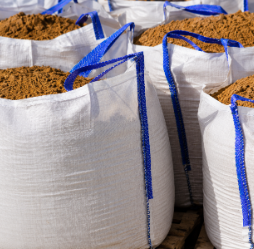
It's a scene repeated in many industrial warehouses: shipping bags, containers, and boxes piled up in a corner, gathering dust and taking up space. But beyond simply tidying up the chaos, finding a use for used big bags is also a way of taking responsibility, both for the resources already used and for those that can still be avoided.
These large, sturdy, and versatile bags, designed for moving bulk materials, have more than one life to offer. And leaving them unused, or discarding them after a single use, is wasting that potential.
Today, there are simple ways to extend their usefulness by reusing, refurbishing, or transforming them into new resources. Because in a model where the circular economy is steadily advancing, making use of what already exists is not just a sensible option.
It's an essential part of the solution.
What is a big bag?
At first glance, a big bag might just look like a big bag.
But big bags, also known as sacks, bulk bags, or polypropylene bags, are flexible multipurpose containers (FIBCs) designed to transport and store bulk materials such as aggregates, pellets, fertilizers, or food, among others.
Their robust structure allows loads of up to 2,000 kg, adapting to different shapes and weights thanks to the polypropylene or polyethylene that provides flexibility without sacrificing stability.
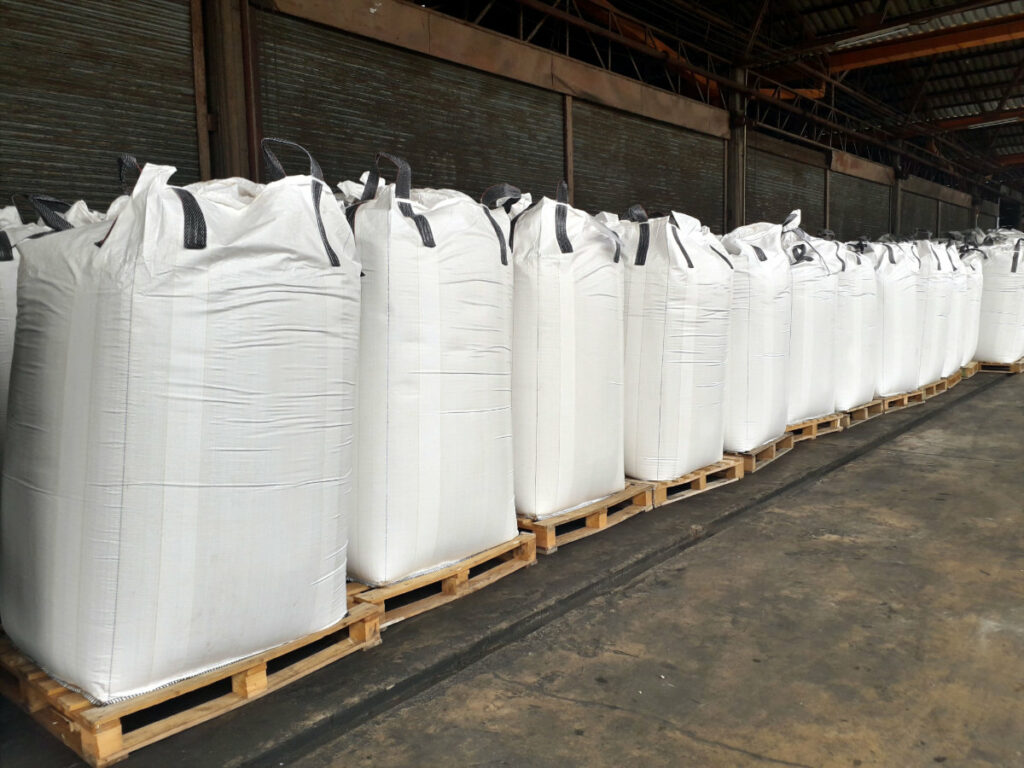
There are many types of big bags depending on their use and characteristics:
- with one, two, or four handles;
- with a flat bottom or valve discharge; or
- with an open mouth, filling valve, or top flap.
This versatility means they are used in sectors as diverse as construction, agriculture, food, and the chemical industry.
The most common material used in the manufacture of big bags is woven polypropylene, chosen for its lightness, tensile strength, and durability. In many cases, these bags incorporate additional treatments such as UV protection or internal coatings, which improves their performance in demanding environments and extends their lifespan. Big bags made of polyethylene (PE) also exist, although they are less common and reserved for very specific uses, such as humid environments or areas with high sun exposure. They tend to be more expensive and, in general, less resistant than polypropylene bags.
As you can see, resistance is an inherent quality in their design. Giving them a second life is not only possible, but also the most logical thing to do.

How Long Does a Big Bag Last? Rules, Cycles, and Certifications
Although designed to be durable, big bags don't last indefinitely.
Their lifespan and reuse are, in fact, regulated by specific standards that dictate how many times they can be used, under what conditions, and under what certifications.
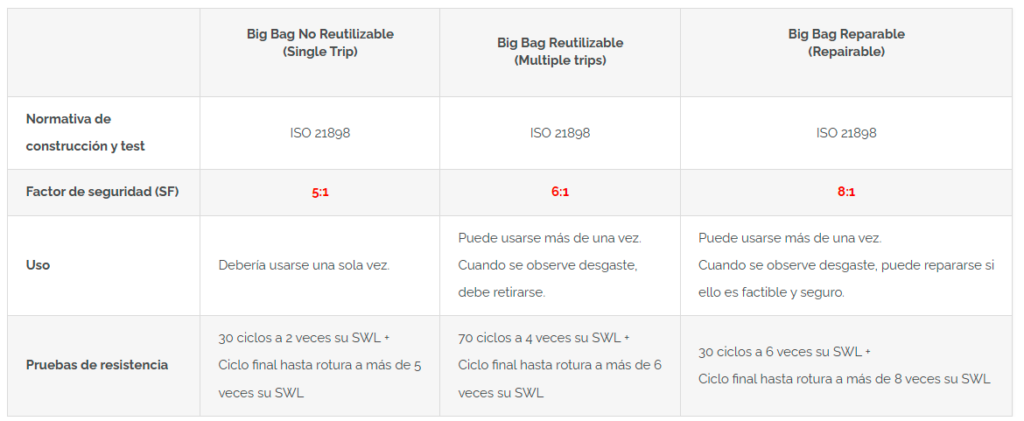
One of the main references is the UNE-EN ISO 21898:2025 standard, which establishes the design, testing, marking, and use requirements for single-use and reusable flexible bulk containers (FIBCs).
This standard regulates the three classification levels for big bags:
- 5:1 → Single Trip (These big bags are subject to the special tax on non-reusable plastic packaging.)
- 6:1 → Reusable (Multiple Trip)
- 8:1 → Reusable for heavy-duty use (Repairable / Heavy Duty)
These figures are known as safety factors. For example, a 1,000 kg bag with a 5:1 rating must withstand 5,000 kg in load tests to obtain the corresponding certification.
Only big bags marked as 6:1 or 8:1 can be reused with guarantees, provided certain conditions are met: cleaning, reconditioning, and use with the same type of material. The standard itself establishes the necessary tests and controls to guarantee their safety in each cycle.uso.
In addition to this classification, there are other specific standards that apply depending on the contents or the environment:
- EU Regulation 10/2011: for materials in contact with food.
- IEC 61340-4-4: on electrostatic charges.
- Recommendations for dangerous goods (ADR, RID, IMDG Code).
Understanding these rules allows you to dispose of used big bags safely, optimizing resources without compromising safety.
The benefits of reusing a big bag
Reusing a big bag is an effective way to prevent it from accumulating dust in a warehouse or ending up in a landfill.
And, besides freeing up space, it has concrete benefits for your company and the environment:
- Less waste: by giving these polypropylene bags a second life, you reduce the amount of discarded plastic and make better use of the resources already invested in their manufacture.
- Lower costs: Reusable bags (6:1 or 8:1 type) allow you to save on new packaging, optimize logistics, and reduce disposal costs.
- Greater environmental consistency: Reusing isn't just an internal measure; it also demonstrates a more conscious way of working, reflected in your actions.
So when you choose to reuse your used big bags instead of throwing them away, you're making a difference. For your business, for your environment, and for a production model that wants and needs to be more sustainable.
Less waste, more savings: Here's how you can reuse your used big bags.
Big bags are designed to last, yet they are often discarded after a single use.
However, if they are in good condition and certified, they can continue to be used in new industrial, agricultural, or logistics cycles. And if they are no longer suitable for their original purpose, there are still ways to prevent them from ending up as waste:
- Direct reuse: If the bags are clean and intact, they can be used for internal tasks, non-food storage, or transporting non-hazardous materials. They can also be used in agriculture, gardening, construction, or as a storage solution in rural or domestic spaces.
- Refurbishment: Specialized companies, such as WorldBag, collect, wash, inspect, and certify used big bags so they can be recirculated safely.
- Recycling: If the bag cannot be reused, the polypropylene can be shredded and used as a secondary raw material in new products, provided it is not contaminated.
- Value creation through recircular: Our platform connects companies that have used big bags with others that can reuse, refurbish, or recycle them, thus facilitating an efficient and traceable circuit.
Source: WorldBag FIBC Reconditioning - Reuse to Reduce
Giving a new life to used big bags isn't just about getting rid of them, but about reintegrating them into a useful, safe, and sustainable cycle.
The time to act is now, and Recircular can help.
Having a pile of used big bags doesn't have to be a problem.
Today, there are real alternatives to reuse, refurbish, or recycle them and give them a second life.
It all starts with a decision: to treat them as a resource with potential instead of seeing them as waste. And in that process, Recircular can guide you and help you discover the potential of used big bags.
From our platform, you can connect with companies interested in these types of materials, manage traceability, evaluate options, and ensure that the process is useful and safe for all parties.
Giving a new life to used big bags isn't complicated.
And at recircular, we help you achieve it.
