Waste management obligations and best practices for businesses
Almost every business, regardless of its activity, has to comply with a series of waste management obligations.
These obligations are required by law and are increasingly driven by markets and society.
In Spain, the legal framework is established by Law 7/2022 on Waste and Contaminated Soils for a Circular Economy, which applies both to those who generate waste and to those who transport or manage it.
However, responsible waste management is not only a legal requirement. It is also an opportunity to improve processes, reduce costs and move towards a more sustainable management model. It all starts with understanding your responsibilities.
Is your business really up to date?
What is waste? Types of waste and key stakeholders
Before discussing waste management obligations, it is important to understand what is considered waste and who is involved in its management.
Law 7/2022 defines waste as “any substance or object which its holder discards or intends or is required to discard.” However, not all discarded materials necessarily remain classified as waste, since following certain recovery operations they may cease to have the status of waste.
What type of waste does your business generate?
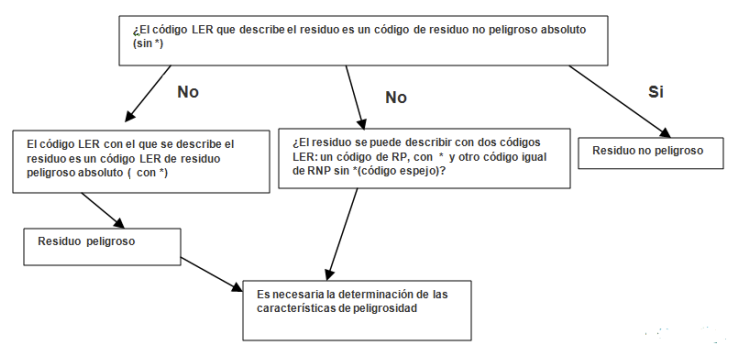
Not all waste is managed in the same way. Regulations primarily classify waste according to its hazardous properties:
- Hazardous waste: waste that has one or more specific hazardous properties, such as toxicity or flammability. It is covered by Annex I of the Law and by the European List of Waste (LoW). This category also includes packaging contaminated with hazardous substances. Its management is subject to stricter controls.
- Non-hazardous waste: waste that does not present specific hazards but must still be managed in accordance with applicable regulations.
The nature of the waste also matters. In sectors such as construction and demolition, for example, it is mandatory to sort waste into separate material fractions — concrete, wood, metals, etc. — to facilitate proper management and recovery.
Source: MITECO
Who is involved in waste management?
Regulations identify different types of individuals and legal entities, each with specific responsibilities in waste management:
- Waste producer: the person or company that generates waste as a result of its activity, or that modifies waste through mixing or other preliminary operations.
- Waste holder: the person or entity physically holding the waste, even if they did not generate it. This could include, for example, the owner of land where waste has been illegally dumped.
- Authorised waste manager: an entity authorised to collect, store, transport or treat waste.
- Waste carrier: the person or company responsible for transporting waste from its point of origin to its final destination.
- Agent: acts on behalf of third parties by organising waste recovery or disposal, without necessarily handling the waste directly.
- Dealer: buys and sells waste on its own behalf, also without necessarily taking physical possession of it.
- Competent authority: the public administration responsible for supervising compliance with legal obligations.
Each of these stakeholders must understand and fulfil their responsibilities to ensure that the system works properly and that waste traceability is guaranteed.

Waste management obligations businesses need to consider
Businesses that generate waste must ensure that every material they discard or recover follows a traceable, safe process that complies with current regulations.
These are some of the key obligations businesses need to meet:
- Waste separation and storage: waste must be stored separately, avoiding incompatible mixtures, leaks or emissions. (Remember that our platform also offers containers and boxes for waste storage).
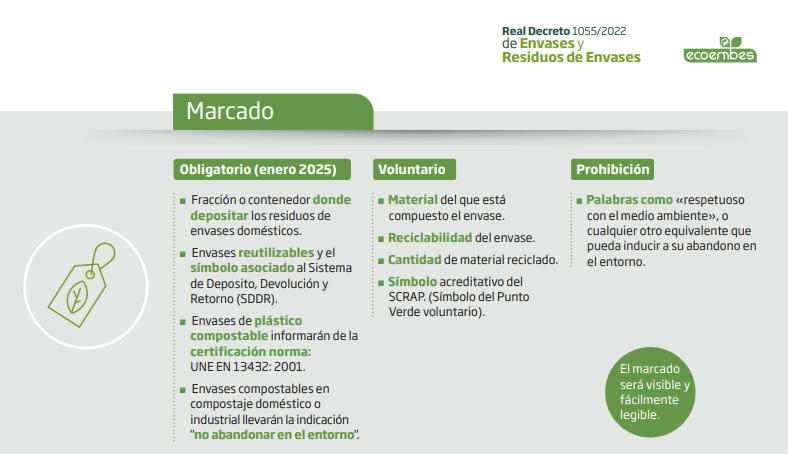
- Labelling and identification: particularly in the case of packaging, in accordance with Royal Decree 1055/2022, which requires clear, visible and legible labelling indicating the appropriate container for disposal. This marking must be durable and remain intact even after the packaging has been opened.
Source: Ecoembes, 2023 (cropped image)
- Digital traceability: waste management activities must be recorded and documented through systems such as eSIR or equivalent regional systems. Identification and movement documents must also be completed for hazardous waste and certain types of non-hazardous waste.
- Transfer and treatment: producers may treat waste themselves if they have the necessary authorisation, or they can hand it over to an authorised waste manager or registered dealer. In either case, the entire process must be properly documented. It is also important to remember that the producer's responsibility does not end when the waste is handed over, but when it has been demonstrated that the waste has been properly treated.
- Records and documentation: businesses generating hazardous waste or more than 10 tonnes of non-hazardous waste per year must keep an electronic chronological record. This must include information such as the quantity, nature, origin, destination, treatment method and recovery or disposal results. Documentation must be retained for at least five years.
- Declarations and administrative procedures: these may include registration in the relevant regional register, prior notification of activities and the annual submission of information to the relevant regional authorities. Specific regional legislation should always be consulted.
The recircular platform facilitates many of these obligations. Among its features, it provides a complete digital traceability solution that allows businesses to track what happens to their waste, as well as a section where they can prepare waste management documentation.
These obligations may seem complex, but complying with them helps businesses prevent penalties, optimise processes and strengthen their environmental commitment.
Beyond waste management obligations: best practices and opportunities
Complying with regulations is essential, but going beyond the minimum requirements creates additional value.
Reducing waste at source, through ecodesign or process improvements, can improve sustainability while also reducing costs.
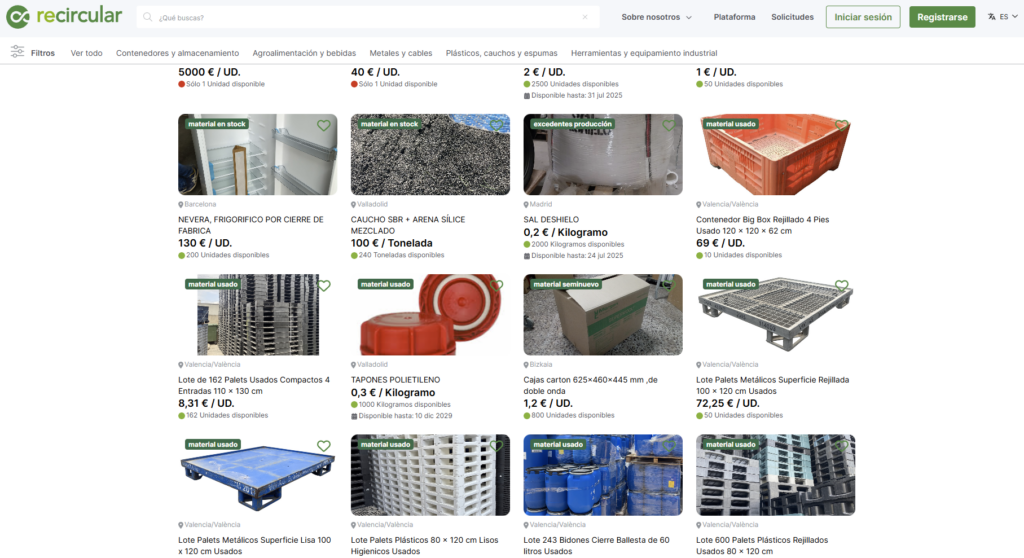
However, when waste generation cannot be avoided, finding ways to give those materials a second life through reuse, recovery or recycling is the best alternative. Our resource recovery platform, which connects businesses generating waste with those that can reuse it as a raw material, helps give waste a second life and can enable companies to:
- Reduce waste management and material costs.
- Lower emissions and the amount of waste sent to landfill.
- Improve sustainability and traceability indicators.
Our solution also facilitates traceability and streamlines administrative procedures by keeping all relevant documentation in one place.
Source: recircular, July 2025.
Obligations that drive the transition towards a circular model
Businesses should start seeing waste management obligations as an opportunity to move towards a more efficient, sustainable and competitive business model. (Did you know that our new circular waste management service can help facilitate this transformation?)
Properly implementing measures such as waste separation, labelling, traceability and delivery to authorised waste managers helps businesses avoid penalties, improve their corporate reputation and optimise processes.
But going further by integrating digitalisation, ecodesign and platforms such as recircular's solution can help transform waste into resources and generate real value.
Managing waste responsibly means complying with regulations, but it also means innovating, connecting and helping lead the transition towards a circular economy.
