Reusing Containers and Drums: Savings, Sustainability and the Future
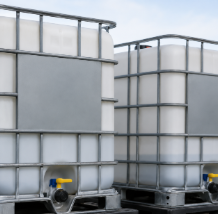
The reuse of industrial containers and drums is a cornerstone of supply chains aiming to achieve greater levels of circularity.
Think, for example, about the amount of goods transported around the world every year inside these containers. Can you imagine the impact that using second-hand or used containers to transport these raw materials and products could have?
In this article, we will explore how reusing industrial containers and drums, such as IBCs, can help companies improve waste management and optimize costs. We will also look at how this approach not only contributes to the circular economy but also generates significant economic and environmental benefits. With all these advantages in mind, do you still think reusable containers are just a trend?
What Does Reusing Industrial Containers and Drums Involve?
Reusing industrial containers and drums means extending their useful life through cleaning and reconditioning processes.
This allows them to remain in logistics and storage supply chains for longer, reducing the need to manufacture new containers.
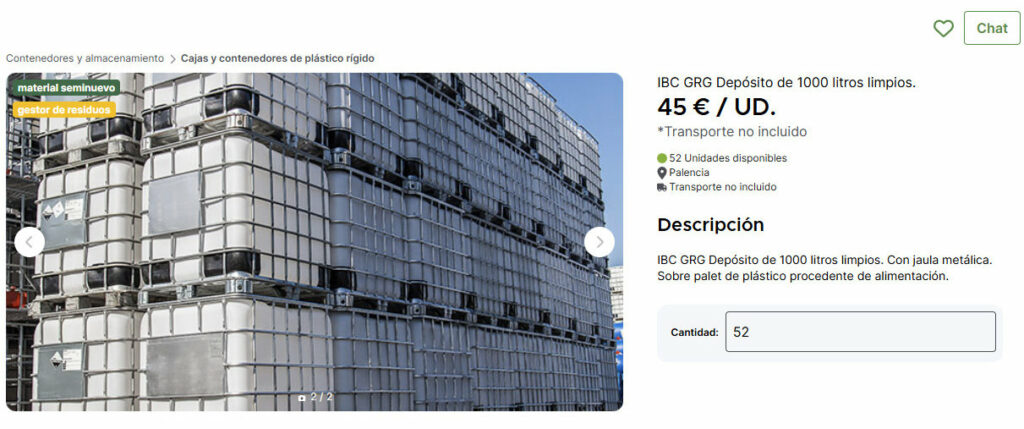
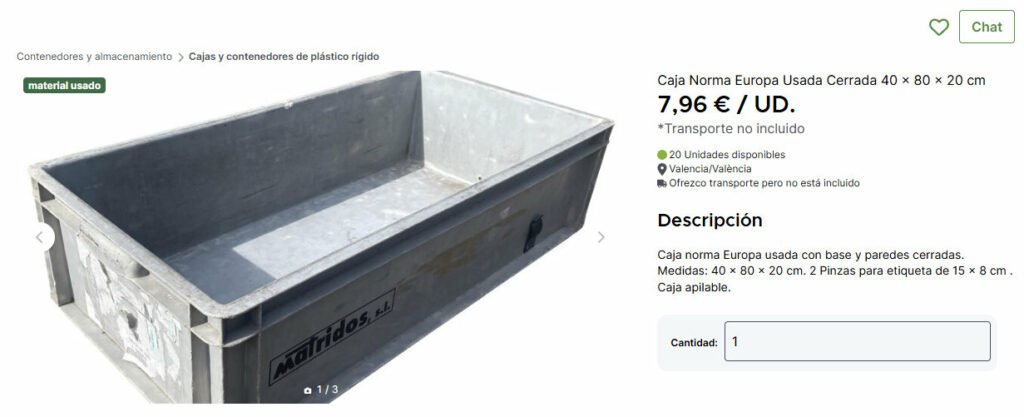
Virtually any durable container can be reused. On our resource recovery platform, we have a dedicated category for containers where you can find everything from IBCs to big bags and plastic boxes. However, two of the most common types are:
- Intermediate Bulk Containers (IBCs), also known as GRGs (Grandes Recipientes para Granel), which are widely used in industry. Their design includes an external metal cage that protects the inner tank. These containers are ideal for transporting and storing chemicals thanks to their strength and different capacities, with 1,000-liter IBCs being among the most commonly used. Their useful life is five years, although when used for the storage or transport of chemicals, they must be inspected every 30 months in accordance with ADR regulations, transposed into Spanish legislation through Royal Decree 97/2014, and
- shipping containers, initially designed to transport goods but which, in recent years, have attracted growing interest because of the possibility of using them in construction.
Cleaning and reconditioning processes are essential to guarantee the safety and efficiency of these containers. The U.S.-based Rigid Intermediate Bulk Container Association (RIBCA) provides a list of defects that make IBCs unsuitable for reuse, ranging from corrosion of the external cage to potential tank leaks.
Reverse Logistics: A Solution for Reusing Containers
Industrial containers are reusable, but recovering them is often one of the biggest challenges.
This is where reverse logistics comes into play: a process that ensures containers are returned from the point of consumption to their point of origin for repair, recycling or reuse.
Reverse logistics can be divided into two main types:
- green reverse logistics, a process in which containers return to their origin to be repaired, recycled or disposed of in an environmentally responsible way, and
- return reverse logistics, where products are returned to stock without requiring additional processing and are ready to be reused, such as an item of clothing purchased online and returned because of a sizing issue.
This activity not only facilitates the implementation of reusable container systems but also drives the development of innovative technological solutions. One notable example is SCHÜTZ Packaging Systems' Ticket Service, which allows users to return empty containers for subsequent reconditioning.

Storage Through Reusable Boxes and Containers
In addition to transportation, storing goods in an organized way is another key function made possible by industrial containers and plastic boxes.
One of their main advantages is that their design maximizes the use of available space. Some types of collapsible containers can reduce storage space requirements by up to 75% when empty.
Furthermore, their standardization allows them to integrate with automated material-handling systems, improving inventory management accuracy while reducing human errors and accidents. This is particularly relevant in industries where traceability is critical, such as the chemical and pharmaceutical sectors.
Reusing Containers, Boxes and Drums as a Driver of Change in Logistics and Storage
The reuse of industrial containers is undoubtedly an opportunity that companies should not overlook.
Extending the life cycle of industrial containers allows companies to:
- reduce costs by eliminating the need to purchase disposable containers. In fact, optimizing logistics operations can result in savings of up to 30%;
- improve brand image by demonstrating a stronger environmental commitment;
- comply with regulations by meeting current and future waste management requirements;
- discover new business opportunities, as recovering and adding value to products can open up new markets, such as the recircular resource recovery platform;
- reduce the volume of waste by extending the useful life of containers; and
- reduce the carbon footprint, with companies such as BITO estimating CO₂ emission reductions of up to 60%.
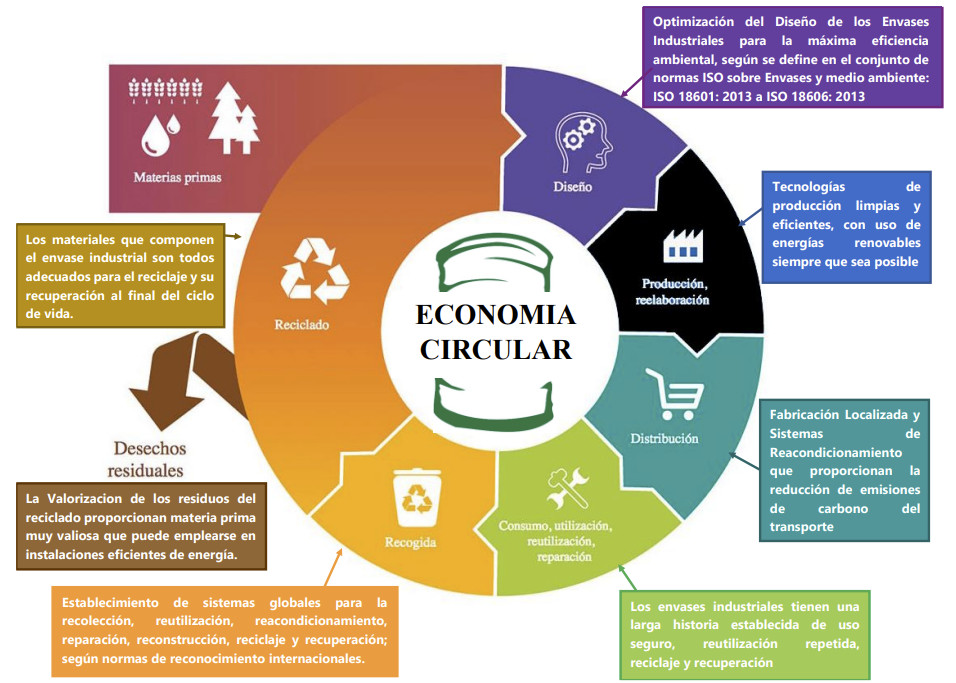
Source: "Reuse: don't send industrial packaging directly to scrap." Presentation by Joaquín López of Bidons Egara, S.L., at the 2022 edition of CONAMA.
Reusing Containers Today to Transform Industry Tomorrow
As you can see, reusing industrial containers and drums is a solution that improves efficiency in logistics and storage while also strengthening corporate sustainability.
Implementing this practice means embracing reverse logistics solutions, high-quality reusable containers and storage systems adapted to make the most of their structural advantages.
Above all, however, it is a logical response to a throwaway model that is struggling to survive, and to the need to build more responsible and resilient businesses.
If your company is ready to take this step, visiting our platform could be a good place to start.
