What are the benefits of reusing IBC containers for businesses?
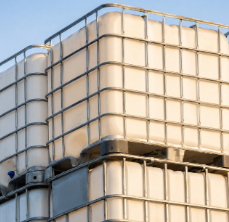
The reuse of IBC containers (Intermediate Bulk Containers) is gaining ground in industrial environments as an alternative to recycling.
Because… why dispose of a container that can still do its job? Some of these containers are used to transport chemicals, oils, food ingredients or fertilizers… and afterwards, instead of becoming waste, they can get a second life.
At recircular, we have always believed that “reuse” should come before “recycle”. Not only because extending the useful life of these containers helps businesses reduce costs, but also because it means less waste, fewer emissions and, ultimately, a smarter way of using resources.
Throughout this article, we will explore why this practice is a key ally for the circular economy, what regulations apply and how recircular helps businesses incorporate reuse into their day-to-day operations.
An IBC container for every industry
IBC containers, also known as Intermediate Bulk Containers, are not all the same.
Although their cubic shape and capacity — most commonly 1,000 litres — make them easy to recognise, their materials, configurations and uses vary depending on the industry and the type of substance they contain.
For example, depending on the material, there are two main types of IBC containers:
- Plastic IBC containers: made from high-density polyethylene (HDPE), these are the most common type. They are reinforced with a metal cage and are known for their chemical resistance, light weight and durability, making them ideal for industrial liquids and non-corrosive products.
- Stainless steel IBC containers: more expensive, but also more durable and resistant. They are used in industries that handle aggressive substances or require strict hygiene conditions, such as the pharmaceutical and food industries.
The type of pallet or base can also vary, with options including wood, plastic or metal.

Source: recircular platform (August 2025)

Source: Conterol (August 2025)
When it comes to their applications, versatility is one of the main advantages of IBC containers:
- In the chemical industry, they are essential for transporting hazardous or sensitive substances.
- In the food industry, they are used to store and transport juices, oils and other food liquids, provided they comply with food safety regulations.
- In agriculture, they can be used for liquid fertilizers, pesticides or even as water storage tanks for irrigation.
- In the pharmaceutical industry, they allow liquid products to be stored and transported under high quality and safety standards.
The reuse of IBC containers involves a rigorous reconditioning process, including collection, inspection, specialised cleaning and, where necessary, the replacement of components. This helps ensure that the containers remain functional and comply with the applicable regulations.
Source: ECOBIDON
Regulations applicable to IBC container reuse
Giving an IBC container a second life is not simply a matter of cleaning it and putting it back on the market.
When these containers are intended for transporting hazardous or sensitive substances, specific regulations must be taken into account regarding how they must be reconditioned, certified and put back into service. In Europe, the main reference is the ADR Agreement, which regulates the transport of dangerous goods by road and is transposed into Spanish legislation through Royal Decree 97/2014.
Part 6 of the agreement establishes the requirements for the construction of packaging, IBCs, large packagings and tanks, as well as the tests they must pass in order to be approved.
These tests must be carried out by authorised bodies or qualified technicians. Although the ADR does not establish a maximum service life, for plastic IBCs the “permitted period of use” is five years from the date of manufacture (Text amending Annexes A and B of ADR 2025 incorporated into Spanish legislation, point 4.1.1.15).
If the contents are not classified as dangerous, as may be the case with water, edible oils or fertilizers that do not pose a chemical hazard, these requirements do not apply. However, this does not exempt new or reused IBCs from meeting basic cleaning and maintenance conditions to prevent issues such as cross-contamination.

Benefits of reusing IBC containers compared with recycling
Reusing an IBC container has a direct impact on business costs, sustainability and competitiveness. Unlike recycling, which involves breaking down the material and processing it again, reuse keeps the product itself in circulation, preserving and extending its value.
- Cost savings: reconditioned IBC containers can cost between 30% and 60% less than new ones, depending on the type, demand and reconditioning company.
- Environmental benefits: while recycling an IBC container involves shredding, melting or reprocessing its materials, reconditioning focuses on cleaning, inspecting and, where necessary, replacing components. Reusing IBC containers can also result in lower CO2 emissions.
- Greater efficiency and flexibility: using reconditioned IBC containers allows businesses to respond more quickly to demand peaks or changes in their logistics needs.
- Regulatory compliance and traceability: reconditioned IBCs intended for dangerous goods must comply with regulations such as ADR. This requires proper documentation, reconditioning records and certificates of conformity, improving internal control and transparency during inspections.

Source: Life Cycle Assessment of Newly Manufactured and Reconditioned Industrial Packaging. October 2015
recircular makes IBC container reuse easier
Our resource recovery platform is a key tool for facilitating the reuse of IBC containers.
Why are we a key player in this circular economy example? Because we:
- connect supply and demand;
- identify reuse opportunities; and
- facilitate traceability and regulatory compliance.
Successful IBC reuse cases through the recircular platform
We have extensive experience in buying and selling IBC containers for reuse, having worked with them for many years.
One of our first user companies, an industrial SME, told us that they had a waste management company handling their IBC containers, but they were not receiving any payment for them. Through our platform, we identified alternative management solutions that not only paid them for the containers but also ensured that they were reused whenever possible.
We also work with companies that have IBC containers previously used for both food products and hazardous substances. In both cases, we have helped them achieve better management solutions through waste managers who pay to acquire the containers, inspect and sanitise them, and then put them back on the market as used or second-hand containers.
In every case, creating economic value alongside environmental and social benefits is a priority for recircular. These examples also demonstrate that, thanks to recircular, reuse is possible, legal, safe and profitable when businesses have access to the right expertise, network of stakeholders and technical support.
Reusing IBC containers means moving forward
IBC container reuse is a real alternative to recycling.
It extends the useful life of a functional resource, reduces waste and helps businesses optimise costs. It is also a fully regulated practice. By complying with the required inspections and regulations, reconditioned IBC containers can be put back into use, including for the transport of dangerous goods.
Applying the circular economy to logistics and the transport of goods is entirely feasible, and at recircular we demonstrate this every day by connecting businesses with solutions that turn waste into value.
If you are ready to explore how your organisation can become part of this reuse network, discover the containers available on our platform or offer your own.
Because reuse is not only possible. It also makes the most sense.
