How to identify and recover industrial waste with recircular
Industrial waste recovery is gaining ground among businesses looking for a more sustainable and profitable way to manage their waste.
At recircular, we welcome this shift because extending the useful life of materials not only provides an alternative to the linear take-make-dispose model, but also helps businesses make better use of the raw materials and effort invested in their production processes. It is a strategy that can reduce costs, improve corporate reputation and support regulatory compliance.
However, to make the most of this opportunity, businesses need to accurately identify which waste streams can be recovered, how to do so and what tangible benefits can be achieved.
This is where our new circular waste management service provides real and measurable value for businesses.
What is industrial waste recovery?
Industrial waste recovery allows waste generated by production activities to be transformed into useful resources.
This transformation can take different forms, from direct reuse and recycling to the recovery of components that still retain value. At recircular, our approach is guided by the waste hierarchy, which prioritises prevention and reuse over disposal.
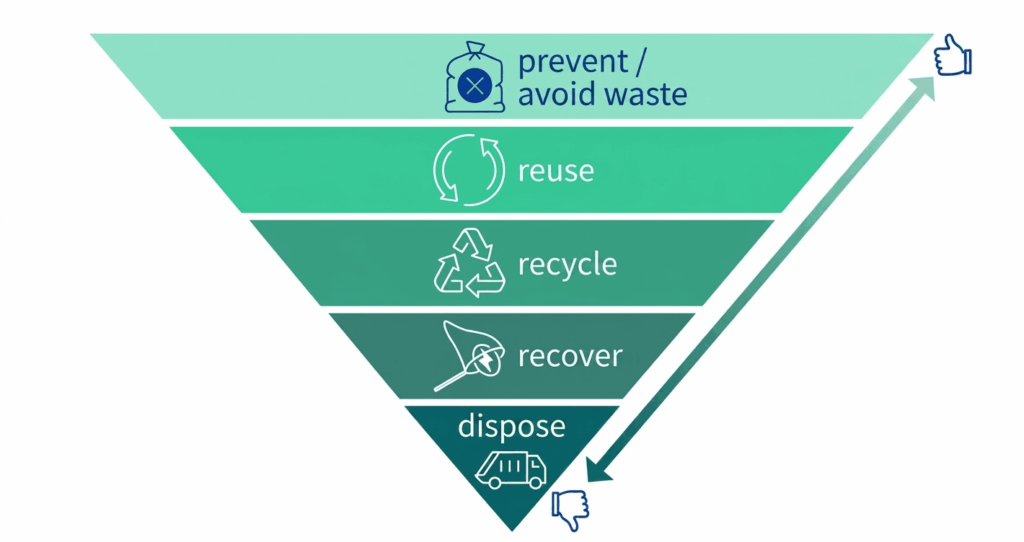
Source: Council of the European Union, 2024
In all cases, the aim is to prevent waste from ending up in landfill or being lost when it could still provide value.
But what exactly is industrial waste? Law 7/2022, of 8 April, on Waste and Contaminated Soils for a Circular Economy, defines it as waste “resulting from production, manufacturing, processing, use, consumption, cleaning or maintenance processes generated by industrial activity as a consequence of its main activity”.
This is a broad definition. However, there are also other resources that do not necessarily have to be considered waste, from surplus materials and by-products to surplus stock, stored materials and even unused industrial machinery. All of these may have recovery potential when managed appropriately.

What are the benefits of identifying and recovering industrial waste for businesses?
Industrial waste recovery clearly has a positive environmental impact by reducing pressure on ecosystems and limiting the consumption of virgin resources.
But it also generates tangible benefits for businesses:
- Regulatory compliance, as businesses are legally required to manage the waste they generate, either themselves, through authorised waste managers or through public or private waste management services.
- Cost savings, because recovering waste can reduce the need to purchase raw materials, lower the volume of waste sent to landfill — and the associated fees — and generate additional revenue by selling reusable materials through resource recovery platforms.
- Social and reputational benefits, by supporting employment in sectors linked to the circular economy and strengthening a company's image among customers, investors and public authorities.
Ultimately, the key is to stop seeing waste as a problem and start seeing it as a source of value waiting to be discovered.
Circular waste management: recircular's solution for businesses that want to go further
Proper industrial waste recovery requires innovation, technology and specialist knowledge to identify the right solutions for each situation.
At recircular, we offer a service designed to support businesses throughout the entire process, combining personalised professional advice with digital monitoring tools.
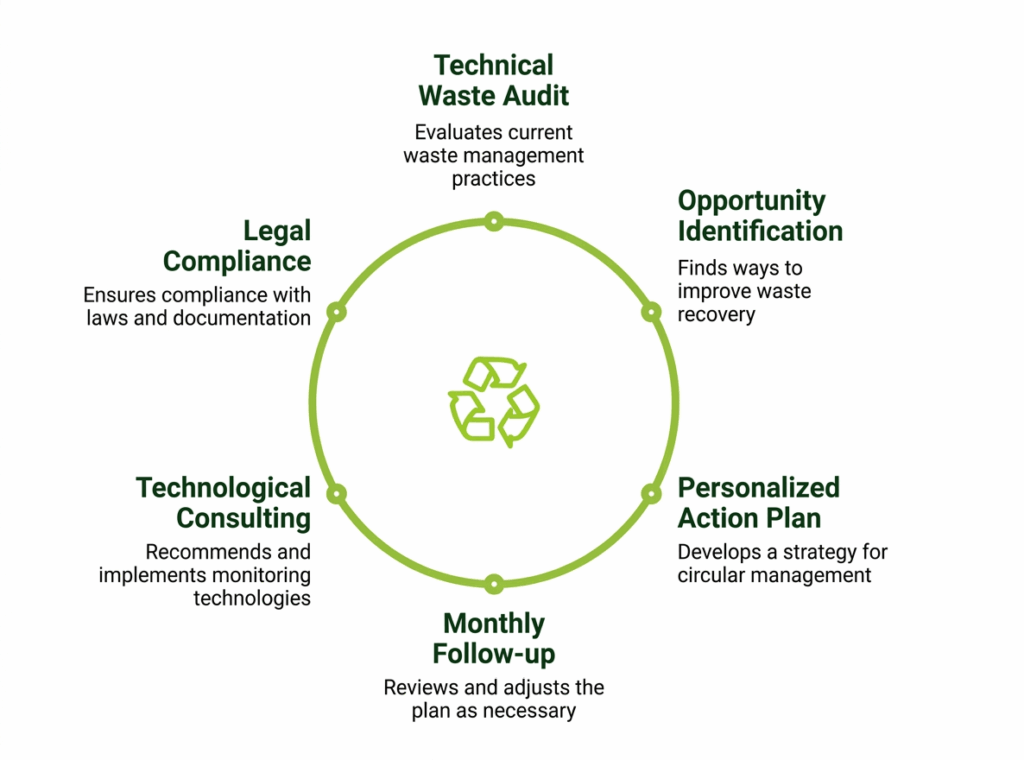
Source: created by recircular
The process starts with a technical audit of the waste generated — including its nature, volume, technical characteristics and current management — as well as an assessment of how those waste streams are currently being handled.
Based on this analysis, we identify the best recovery opportunities, assessing everything from alternative uses in other sectors to reuse or recycling opportunities within the company's own industrial environment.
We then develop a tailored action plan, aligned with current legislation, including the support required to implement tracking technologies and ensure that the process is properly documented. We also provide monthly follow-up, allowing each business to assess the progress and impact of the actions implemented.
The service also provides access to our digital resource recovery platform, where each waste stream is recorded through a complete traceability solution.
In addition to centralising information and ensuring transparency, our platform creates opportunities to connect businesses with other organisations interested in using these waste streams as resources — a capability that has been enhanced through artificial intelligence.
In this way, we promote collaboration and efficiency, turning the circular economy into a practical and profitable reality.
Rethinking industrial waste: an opportunity to transform your production activity
Every day, businesses discard materials that could have a second life. Not because they lack value, but because companies often lack the information, tools or time needed to explore alternative options.
The good news is that this waste can become an opportunity: a source of savings and additional revenue, a way to improve processes or an opportunity to comply with regulations more efficiently.
The key is to look beyond the waste container and ask what could be done with those materials if the right information were available.
At recircular, we help you answer that question.
We analyse your waste streams, identify the best possible destination for each one and support you step by step so that circular waste management stops being a theoretical concept and becomes a practical reality within your business.
Shall we explore the opportunities together?
