Is it possible to celebrate Christmas without wasting food?
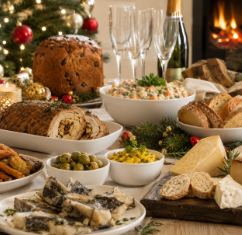
Christmas is a time of excess, and if there is one thing that is never in short supply in most households, it is huge amounts of food and drink — a habit that increases food waste.
But at Recircular, we believe that the best way to celebrate the festive season and start the new year on the right foot is to think a little more about the planet. So, we're going to give you some "recipes" to help you shop and consume more responsibly.
This Christmas, consume responsibly*
(*The whole "White Christmas" thing is becoming increasingly difficult, but hey, our rhyme turned out pretty good.)
You've probably heard about the problem caused by food waste.
How much food is wasted around the world? According to the UN, we waste approximately 17% of all food available to consumers every year, equivalent to around 1 billion meals every day.
This wasted food is not only a pointless waste of money; it is also an environmental problem that contributes to climate change, as well as a social issue, since the food we waste could help feed many people.
Reducing food waste, therefore, is not only an act of responsibility, but also a way to align ourselves with the Sustainable Development Goals (SDGs), particularly SDG 12, which focuses on responsible consumption and production.

Why is more food wasted at Christmas?
Because we buy more. As we mentioned at the beginning, one of the traditional sights of the festive season is tables overflowing with food. And this comes at a cost.
In 2023, Too Good To Go, the company behind an app designed to help tackle food waste, conducted a survey of 1,000 people about this particular time of year. The results showed that:
- 32.1% waste more than 10% of the food they buy;
- 22% throw away between 11% and 25%;
- 7% waste between 26% and 50%; and
- 3.1% waste more than half of their food.
In financial terms, the largest group of respondents who admitted to wasting food throws away around €30 worth of food.
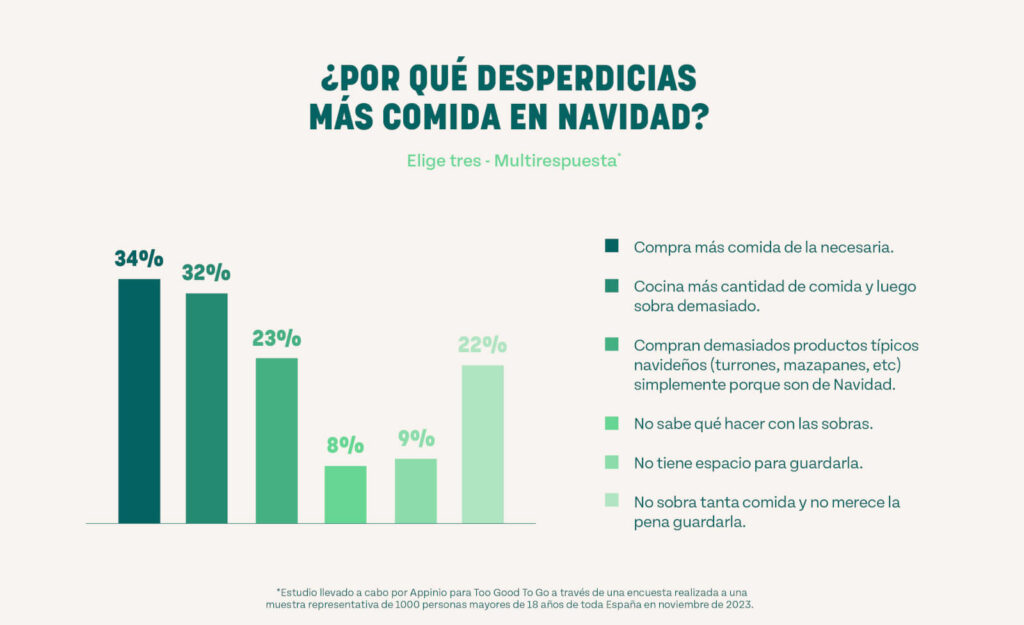
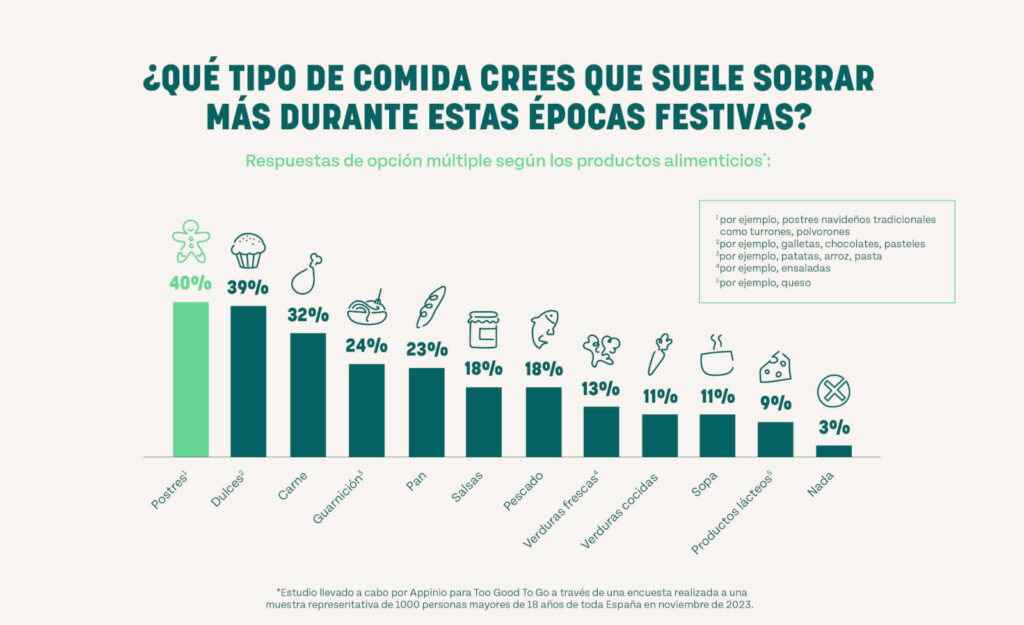
Source: Too Good To Go, November 2023
Small changes can save large amounts of food
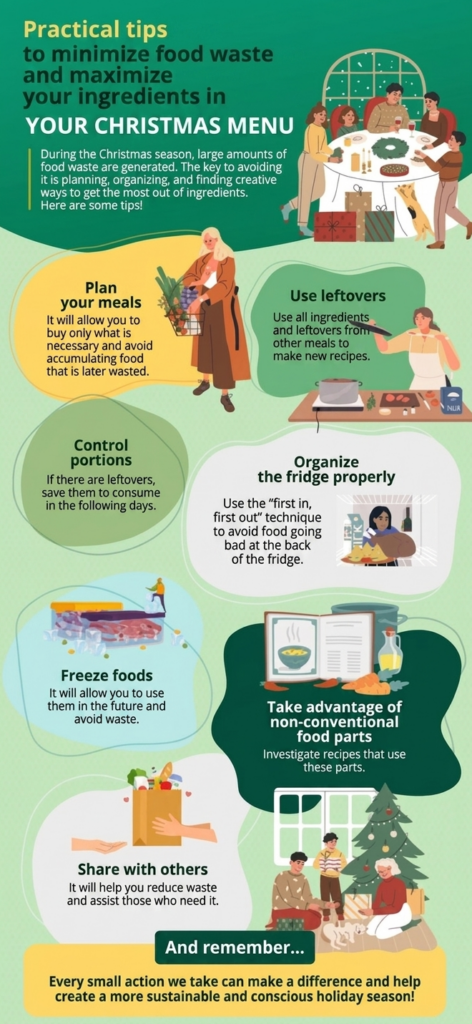
Now that we've looked at the causes, it's time to find some solutions. Here are a few ideas you can put into practice this year.
- Plan ahead and make a shopping list, calculating portions according to the number of guests. And don't fall into the trap of buying more food simply because it's on sale.
- Let your imagination run wild and get creative with leftovers, turning them into new dishes. Croquettes, cannelloni or homemade stock are just a few examples that are especially welcome when it's cold outside.
- Donate food (as long as it is still in good condition), freeze it or store it properly (and keep an eye on use-by dates).
- Educate and raise awareness among the whole family with the goal of reducing food waste. Talk about the food that gets thrown away and how small actions can contribute to change.
What can you achieve in return?
- Save money by buying only what you need and making the most of leftovers.
- Reduce greenhouse gas emissions and contribute to a more sustainable planet.
- Help people in vulnerable situations by donating food.
A Christmas without food waste is possible
We know it's not always easy, but by acting consciously and taking a little responsibility, it is possible to reduce the amount of food we waste.
Every action, from proper planning to getting creative with leftovers, can have a positive impact.
As SDG 12 highlights, responsible consumption and production are key to building a sustainable future.
This year, celebrate a Christmas with less waste and more awareness.
Merry Christmas and happy holidays!
