Packaging Refilling and Reuse: Key Concepts for Understanding Circular Models
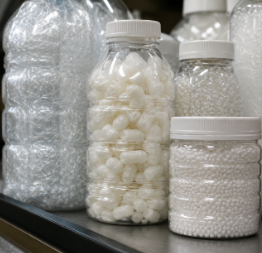
Plastic is often referred to as the “material of 1,000 uses.”
However, its indiscriminate use, particularly when it comes to single-use packaging, is causing an unprecedented environmental crisis. Every year, we produce more than 400 million tonnes of plastic, one third of which is discarded after a single use (and this is one of the most conservative figures we have come across).
We therefore urgently need realistic solutions to improve plastic waste management.
At recircular, we believe that both packaging refilling and reuse should be key elements of this transition. After all, they reinforce the “R” we like so much: “Reduce”. They address the problem at its root by minimizing resource extraction, reducing emissions and decreasing the amount of waste we generate.
Packaging Refilling vs. Packaging Reuse: Same Goal, Different Approaches
First of all, we want to make it clear that, for the purposes of this article, we will make a distinction between packaging refilling and packaging reuse.
Both strategies aim to reduce the amount of plastic packaging waste generated and, in fact, the terms “refill” and “reuse” are sometimes used almost interchangeably. But they are not the same.

What Is the Difference Between Refilling and Reusing Packaging?
From a regulatory and operational perspective, there are important differences:
- Packaging refilling: the final consumer refills the original packaging at home or at specific refill points, taking responsibility for its cleaning and maintenance. No reuse management system is required. Economic operators must provide instructions for safe refilling, such as recommending the use of containers that previously held the same product and ensuring that they are in a suitable and clean condition. According to Article 28.4 of Regulation (EU) 2025/40, they are exempt from responsibility for hygiene and food safety in this context. One example is the LessPack initiative, which we will discuss below.
- Packaging reuse: reusable packaging forms part of a system controlled by the producer or distributor, which is responsible for its collection, cleaning, sanitization and redistribution. It must comply with standards such as UNE-EN 13429, be specifically designed for reuse and form part of a return system. A clear example is reusable cups used at festivals and events.
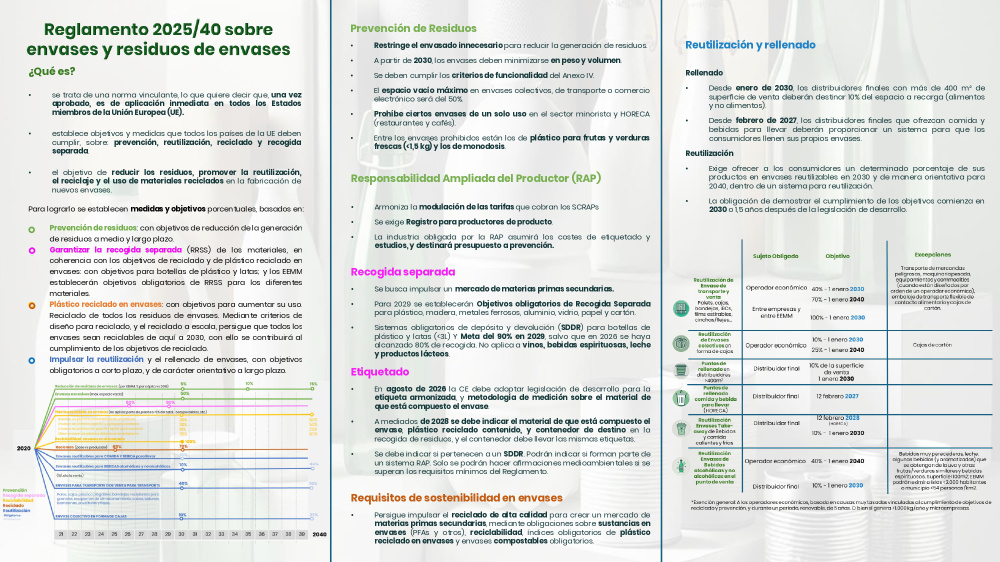
Key aspects of Regulation (EU) 2025/40 on packaging and packaging waste. Source: CEOE
As you can see, the main difference between the two concepts lies in who is responsible for the packaging after its initial use. While refilling delegates this responsibility to the consumer, reuse keeps control in the hands of an economic operator, which involves greater logistical and regulatory commitments.
When it comes to packaging refilling or “refill”, as pointed out by the Ellen MacArthur Foundation, it can take place at home or on the go, in supermarkets and other locations.

Business models for refillable and reusable packaging. From left to right and top to bottom: refill at home, refill on the go, return from home and return on the go. Source: Ellen MacArthur Foundation, 2023
Refillable Packaging: Simplicity That Drives Circularity
To clear up any doubts the previous section may have raised, here are a few examples that may also inspire you:
- Algramo, a Chilean business based on smart dispensers and electric tricycles that provide cleaning products and food.
- MIWA, a Czech company that has developed a refill system suitable for beverages, coffee and cleaning products, which has been tested by companies such as Nestlé.
- Freshly Cosmetics, which enables users to refill their original glass containers at home.
- LessPack, an initiative in which recircular collaborates with Ecoembes and Asociación Vertidos Cero. Since March 2025, we have been developing a pilot project at Mercado de Las Águilas in Madrid, using a bulk cleaning-product dispenser. Consumers bring their empty, clean and undamaged container, which must previously have contained the same product they are going to refill. They fill it, attach the label printed by the machine and pay.
As you can see, packaging refilling is a practical and accessible solution that reduces the use of single-use packaging and encourages active consumer participation. It can be implemented in a wide range of settings, from homes to retail outlets.
“As a specific measure to prevent packaging waste, Member States should actively promote reuse and refill solutions. They should encourage the establishment of reuse and refill systems and monitor their operation and compliance with hygiene standards.” (Recital 149 of Regulation (EU) 2025/40)
Packaging Reuse: Bringing Back Old Habits
Packaging reuse is not a new concept.
Until the 1980s, returning glass bottles to manufacturers for cleaning and refilling was common practice. In a way, the deposit return system (DRS) that will come into operation in 2026 is based on a similar idea, although in this case its main objective is to increase the recycling of plastic bottles, cans and cartons.
But going back to reuse, there are already several real-world examples in which an economic operator takes responsibility for the packaging.
- Vichy Catalán, which uses returnable glass bottles collected from homes and various retail outlets.
- Loop, from TerraCycle, which has partnered with different brands to implement a reuse system, aiming to make reuse the new recycling when it comes to packaging.
- Bumerang, a reusable packaging project for food and beverages, with no initial cost for users and flexible returns at participating locations. Each container has a QR code that makes it possible to track its use up to 200 times.
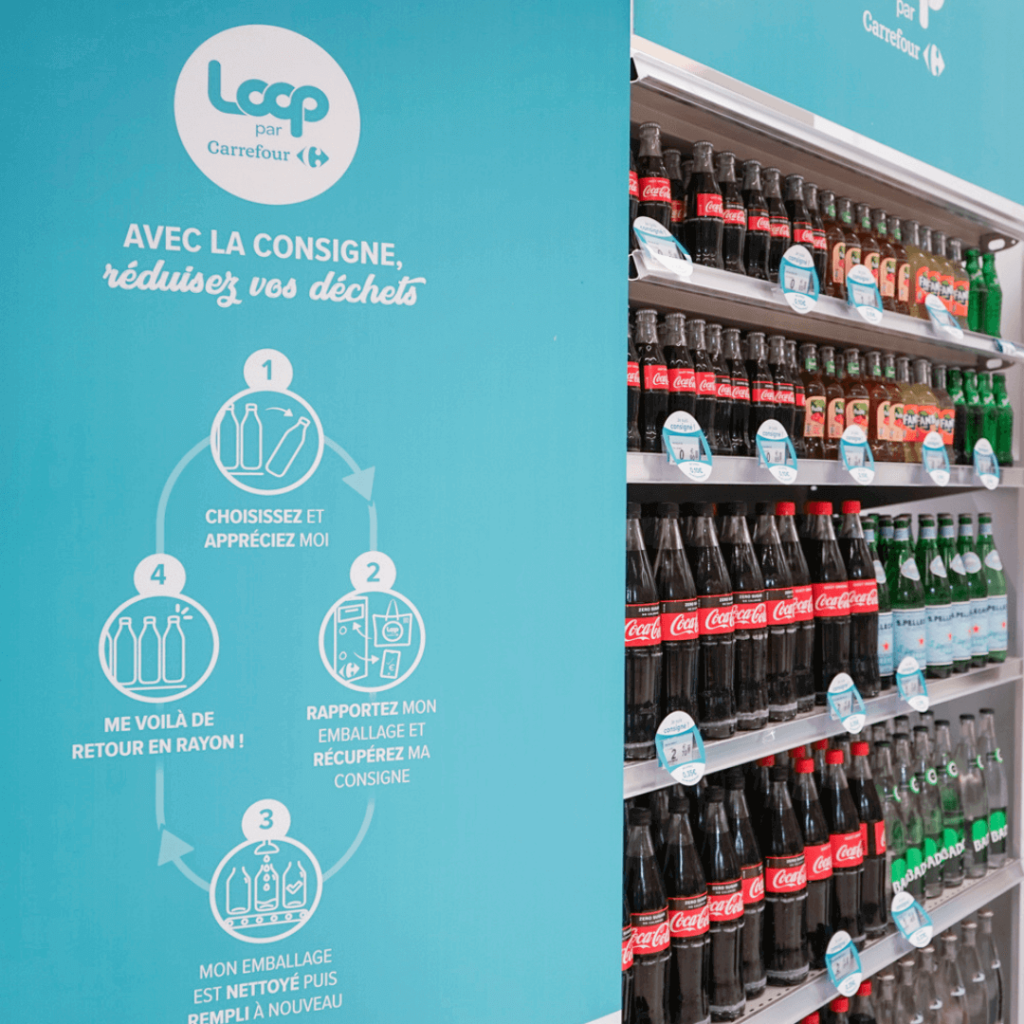
Diagram showing how the Loop solution works in a Carrefour supermarket. Source: Loop
Refilling and Reuse: A Circular Path with Multiple Routes
A sustainable packaging system requires refillable and reusable packaging, each with its own characteristics, to form part of the solution.
The solutions are already available, and the companies that know how to adapt to the changes ahead will be the ones leading the transition towards a truly circular economy, turning packaging reuse and refilling into a competitive advantage.
If you would like to explore the possibilities that a packaging refill model could offer your business, get in touch with us!
